Unlike voluntary charity, Zakat is not yours to direct wherever you like. Allah Himself defined its recipients — one of very few acts of worship where the Qur'an spells out the beneficiaries by name:
“Zakat expenditures are only for the poor and the needy, and those employed to collect it, and for bringing hearts together, and for freeing captives, and for those in debt, and for the cause of Allah, and for the stranded traveller — an obligation from Allah. And Allah is Knowing and Wise.” — Surah At-Tawbah (9:60)
The word “only” (innama) makes this list exclusive. Scholars call these eight groups the asnaf. Understanding them matters for two reasons: your Zakat is only valid if it reaches an eligible recipient, and knowing the categories helps you see where your money does the most good.
The Eight Asnaf
1. The Poor — Al-Fuqara
Those who own less than the Nisab threshold and lack the means to meet their basic needs. This is the largest category and the primary purpose of Zakat — lifting the poorest out of hardship.
2. The Needy — Al-Masakin
Those in visible or hidden hardship — they may have some income but not enough to cover essentials such as food, shelter and medicine. Many scholars describe the miskin as even more constrained than the faqir.
3. Zakat Administrators — Al-‘Amilina ‘Alayha
People appointed to collect, safeguard and distribute Zakat. Classically these were state collectors; today scholars apply this to the legitimate administrative costs of delivering Zakat to the right hands.
4. Those Whose Hearts Are to Be Reconciled — Al-Mu’allafati Qulubuhum
New Muslims and those inclined towards Islam whose faith or ties to the community may be strengthened through support.
5. Freeing Those in Bondage — Fir-Riqab
Historically, freeing slaves and captives. Contemporary scholars apply this to freeing people from modern forms of bondage such as captivity and bonded labour.
6. Those in Debt — Al-Gharimin
People overwhelmed by debt taken for lawful needs — medical bills, basic living costs, business failure — who cannot repay it. Zakat frees them from the humiliation and pressure of debt.
7. In the Cause of Allah — Fi Sabilillah
Classically understood as those striving in Allah's cause; some contemporary scholars interpret it more broadly to include essential Islamic welfare work. It is not an open licence to spend Zakat on any good cause.
8. The Stranded Traveller — Ibn as-Sabil
A traveller cut off from their wealth and unable to return home — today this includes refugees and displaced people, of whom Pakistan hosts many.
Who Cannot Receive Zakat
- The wealthy — anyone whose own wealth exceeds Nisab.
- Your dependants — spouse, children, parents and grandparents, whom you are already obliged to support. (Zakat to other relatives, such as a poor sibling, is allowed and doubly rewarded — see Zakat vs Sadaqah.)
- Banu Hashim — the family of the Prophet ﷺ, per the majority position.
- Buildings and public works — mosques, wells and roads are funded from Sadaqah, not Zakat, because Zakat requires tamlik (transfer of ownership to a person).
How HBSMWA Distributes Zakat in Pakistan
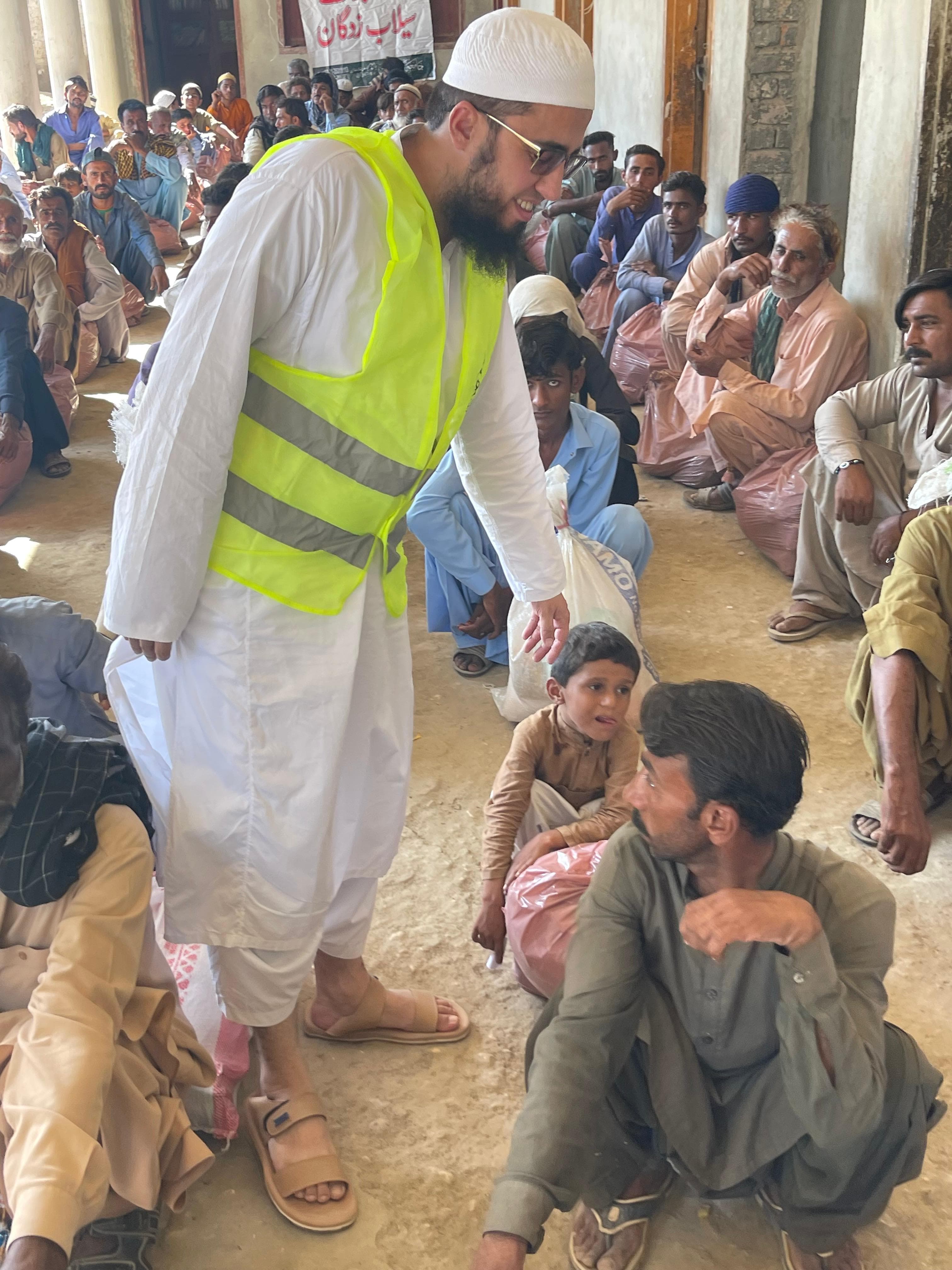
HBSMWA keeps Zakat funds strictly separate from general donations and distributes them to verified recipients in the first two categories above — the poor and the needy. In practice that means monthly ration support for destitute families, care and schooling for orphans from poor households, and support for widows with no earner. Every recipient is assessed against the Nisab standard before receiving Zakat.
When you give through a charity, you are appointing it as your wakil (agent). Choose one that understands the fiqh of Zakat — the separation of funds, the tamlik condition, and recipient eligibility — and can show you where the money went.
This article summarises well-established scholarly positions for general education and is not a personal fatwa. For specific cases, consult a qualified scholar.