
Hajj Guide 2026
The Complete Guide to Islam's Sacred Pilgrimage
Hajj is the fifth pillar of Islam — a once-in-a-lifetime journey to Makkah. Learn its meaning, steps, history, and how to prepare.
What is Hajj?
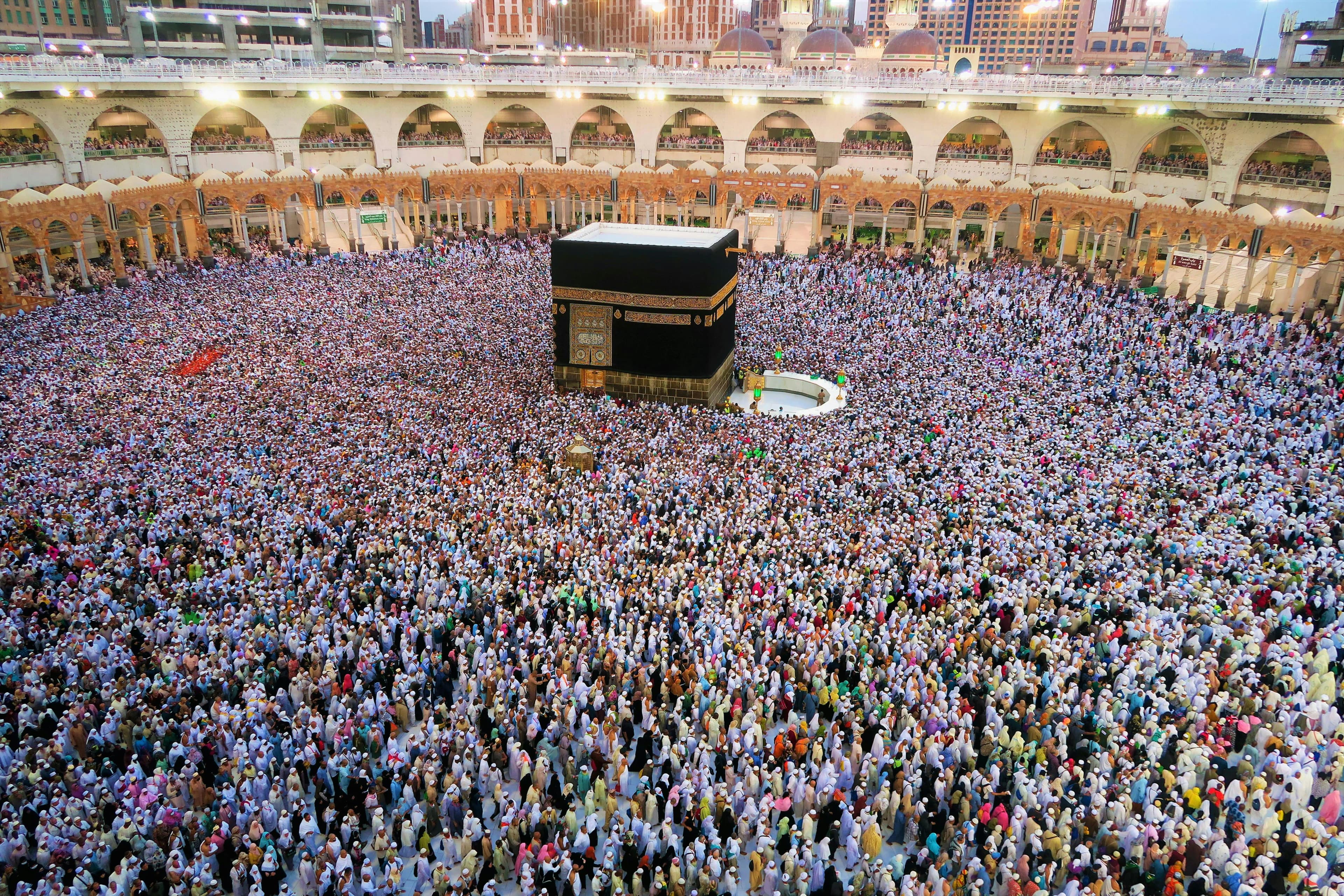
The word Hajj (Arabic: حج) literally means "to set out for a definite purpose." In Islamic law, it refers to the pilgrimage to the Kaaba in Makkah, performed during specific days of the Islamic month of Dhul Hijjah.
Hajj is mandatory once in a lifetime for every adult Muslim who is of sound mind, physically capable, can afford it without financial hardship to dependents, and can travel safely. It binds Muslims to the legacy of Prophet Ibrahim (AS), Prophet Muhammad ﷺ, and every believer who has ever stood on the plains of Arafat.
Hajj in the Quran
"And [due] to Allah from the people is a pilgrimage to the House — for whoever is able to find thereto a way."
— Surah Aal-Imran 3:97
Video Guide: Step-by-Step Hajj
The 7 Steps of Hajj
Hajj follows a precise sequence of rituals across roughly five days (8th to 13th of Dhul Hijjah). Here is a quick overview of the core steps.
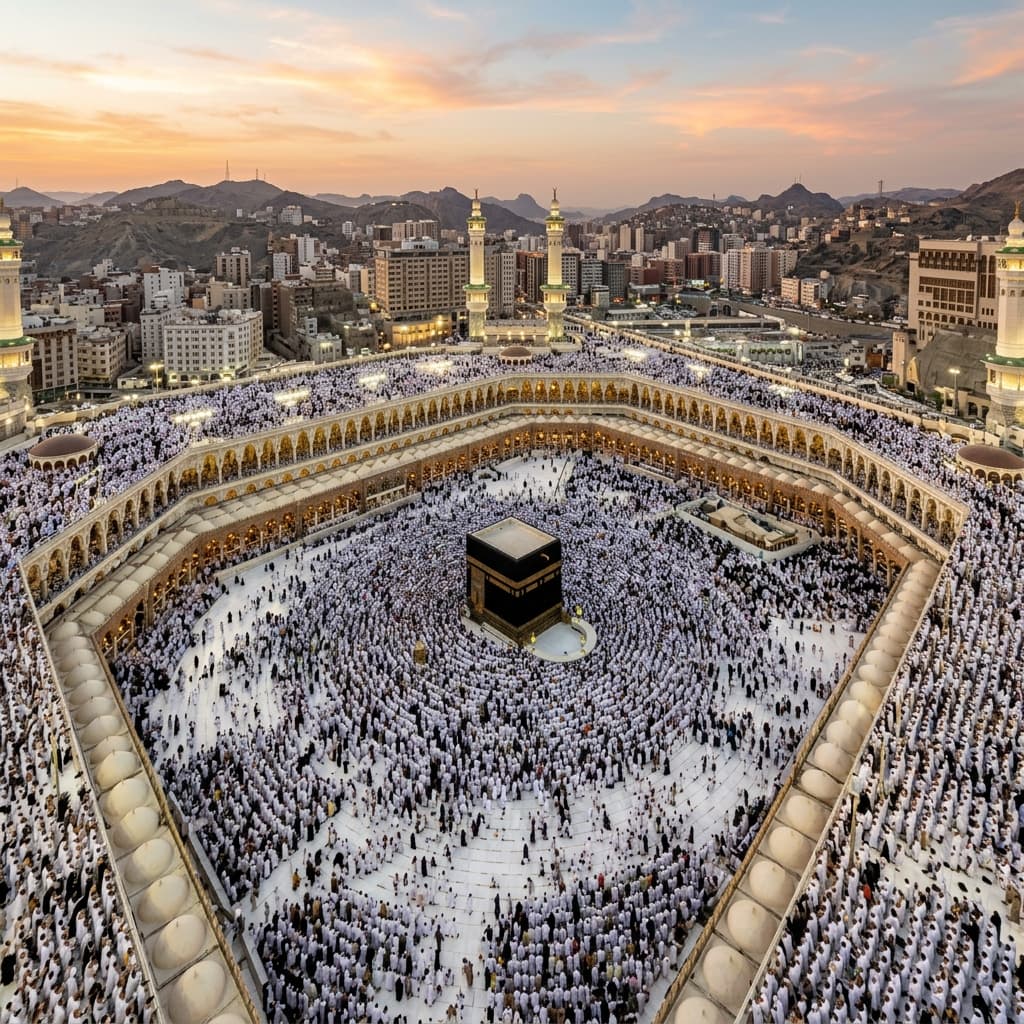
Ihram
Entering the sacred state of purity. Men wear two unstitched white cloths, symbolizing equality and humility before Allah, while women wear modest clothing that meets Islamic requirements.
Tawaf al-Qudum & Sa'i
The arrival circumambulation of the Kaaba (seven times counter-clockwise), followed by walking seven times between the hills of Safa and Marwa, reliving Hajar's desperate search for water for her infant son Ismail (AS).
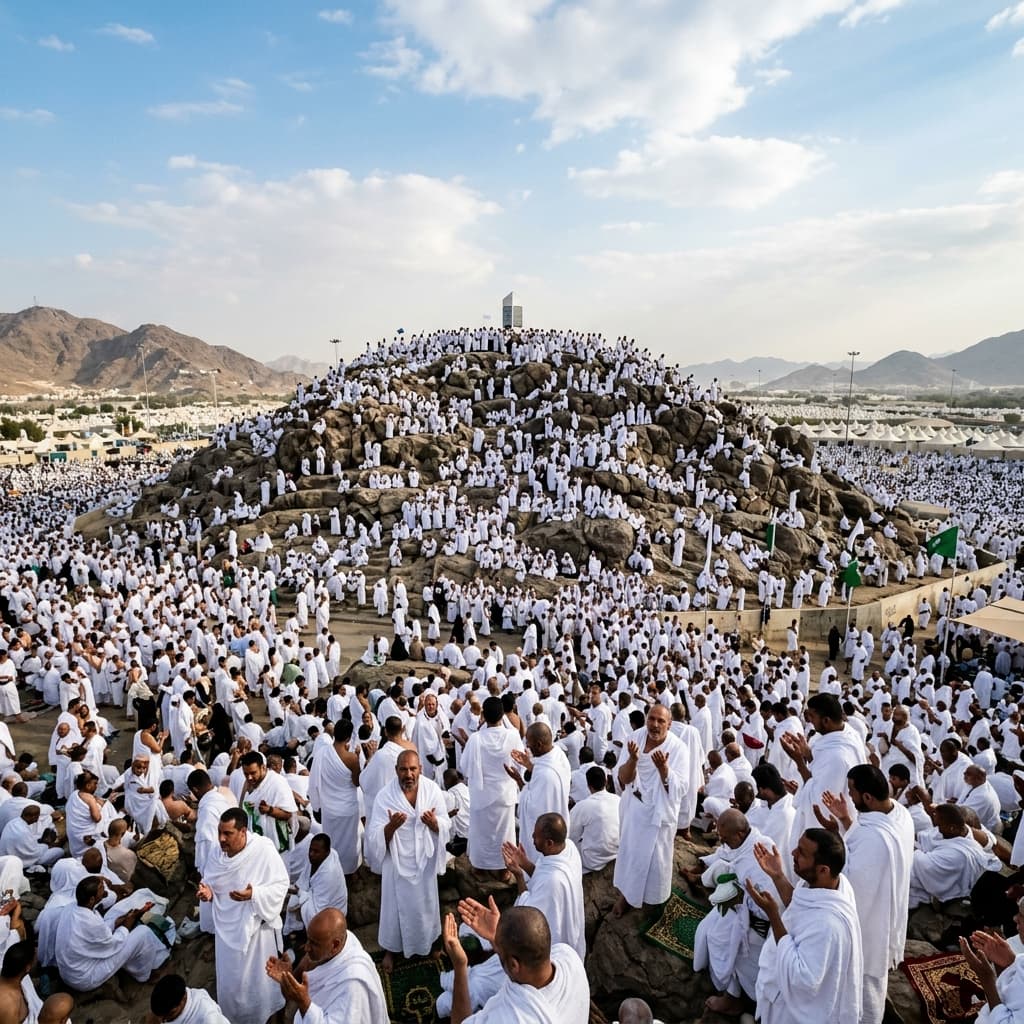
Wuquf at Arafat
Standing at the plain of Arafat on the 9th of Dhul Hijjah. This is the most essential rite of Hajj, where pilgrims spend the day in deep prayer, seeking forgiveness from Allah.
Muzdalifah
After sunset at Arafat, pilgrims travel to Muzdalifah. Here they pray Maghrib and Isha together, gather small pebbles for the next day's ritual, and spend the night sleeping under the open sky.
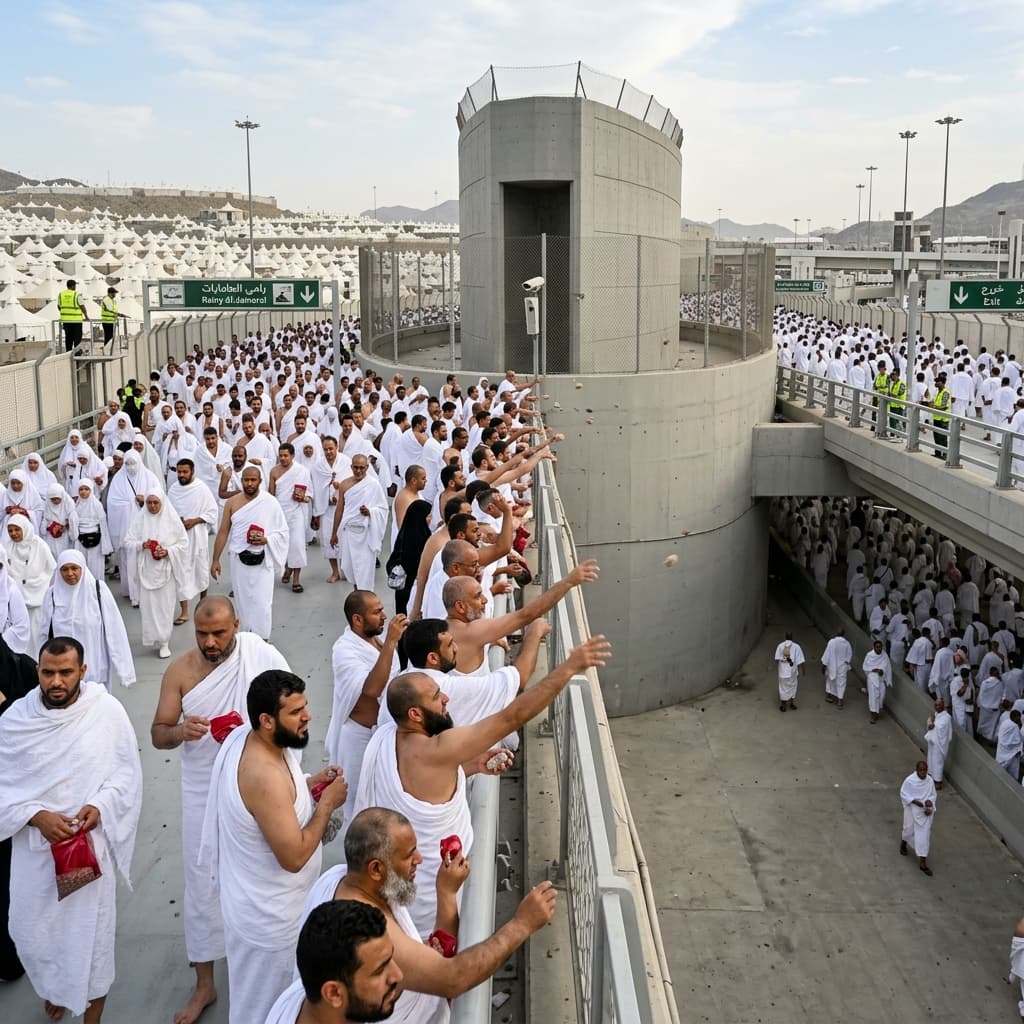
Ramy al-Jamarat
Stoning the three pillars at Mina. This ritual commemorates Prophet Ibrahim's (AS) rejection of Shaytan's whispers when commanded to sacrifice his son.
Qurbani, Halq & Tawaf al-Ifadah
The animal sacrifice (Qurbani) on Eid al-Adha, followed by shaving or trimming the hair (Halq/Taqsir), and the final circumambulation of the Kaaba (Tawaf al-Ifadah).
The Story Behind Hajj
Almost every Hajj ritual reenacts a moment from the lives of Prophet Ibrahim (AS), his wife Hajar, and their son Prophet Ismail (AS). When pilgrims walk these paths, they are not performing empty rituals. They are joining a chain of devotion that stretches back four thousand years.
Read the full story →Hajj vs Umrah
Hajj is obligatory once in a lifetime and can only be performed in Dhul Hijjah. Umrah is highly recommended and can be performed any time. Hajj has more rituals, lasts longer, and includes Arafat, Muzdalifah, and Mina. Umrah involves only Tawaf, Sa'i, and shaving or trimming of hair.
See full comparison →Hajj 2026: Dates & Registration
The expected dates for Hajj 2026 fall in late May / early June (subject to moon sighting). Pilgrims from outside the Gulf must apply through the Saudi government's Nusuk Hajj platform.
When You Can't Make The Journey
The reality is, most of the world's 1.9 billion Muslims will never be able to perform Hajj. But the spiritual season belongs to every Muslim. The Prophet ﷺ taught that good deeds in the first ten days of Dhul Hijjah are the most beloved to Allah.
Qurbani 2026
The sacrifice of an animal on Eid al-Adha is mandatory upon every financially able adult Muslim. Your sacrifice feeds families in flood-affected Pakistan and Palestine.
Give QurbaniSadaqah Jariyah
Build a water well as Sadaqah Jariyah for a departed loved one, or sponsor a child's education. Continuous charity earns reward long after you have passed.
Build a WellCalculate Zakat
Many Muslims choose to pay their annual Zakat in Dhul Hijjah to compound the season's immense rewards. Use our calculator to determine your exact obligation.
Calculate Now"And proclaim to the people the Hajj; they will come to you on foot and on every lean camel; they will come from every distant pass."
— Surah Al-Hajj, 22:27